Inheriting the Techniques and Spirit of Edo

We faithfully uphold three vows of “Victory” (勝: Katsu) and maintain strict self-discipline to deliver high-quality products.
This founding aspiration became our company name, Sansho Co., Ltd. (三勝, literally “Three Victories”).
Today, more than a century since our founding, the social environment has changed, and traditional dyeing techniques like Nagaita Honzome (Long-board True Dyeing), Chūgata Chūsen (Medium-design Pour Dyeing), and Shōaizome (True Indigo Dyeing) are preserved by only a few factories and artisans.
However, our main pillar of business remains the succession of yukata dyeing techniques cultivated through the innovation and diligent research of our predecessors.
Building upon this, we aim to contribute widely to society through the planning and development of products that match new lifestyles and fashion trends.

Origin of the Gourd (Hyōtan) Trademark

The gourd (Hyōtan) has been cherished since ancient times as a symbol of good fortune—”luck and happiness,” “prosperity of descendants,” and “business success”—due to its spreading vines, fruit clustered like bells, and numerous seeds.

The gourd was also constantly used and kept close as a container for sake or medicine.

Furthermore, there is the famous “Sennari Hyōtan” (Thousand Gourd) battle standard of Hideyoshi Toyotomi, who added a gourd to his belt after every victory until he unified the nation.
The grouping of six gourds, “Rokuhyōtan” (Six Gourds), is also well known as a charm for “Mubyō-sokusai” (sound health and freedom from illness).

Inspired by this history, we chose the gourd as our trademark, wishing the wearer “abundant fortune.”

People Who Uphold Sankatsu

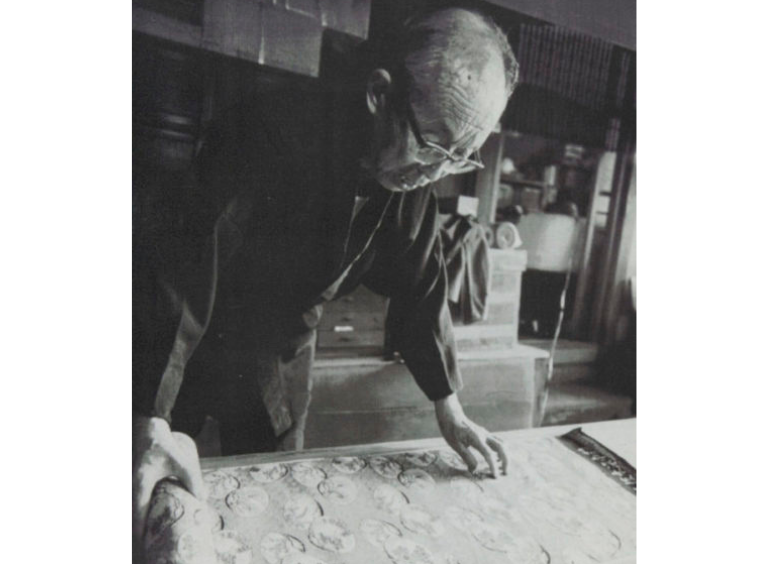
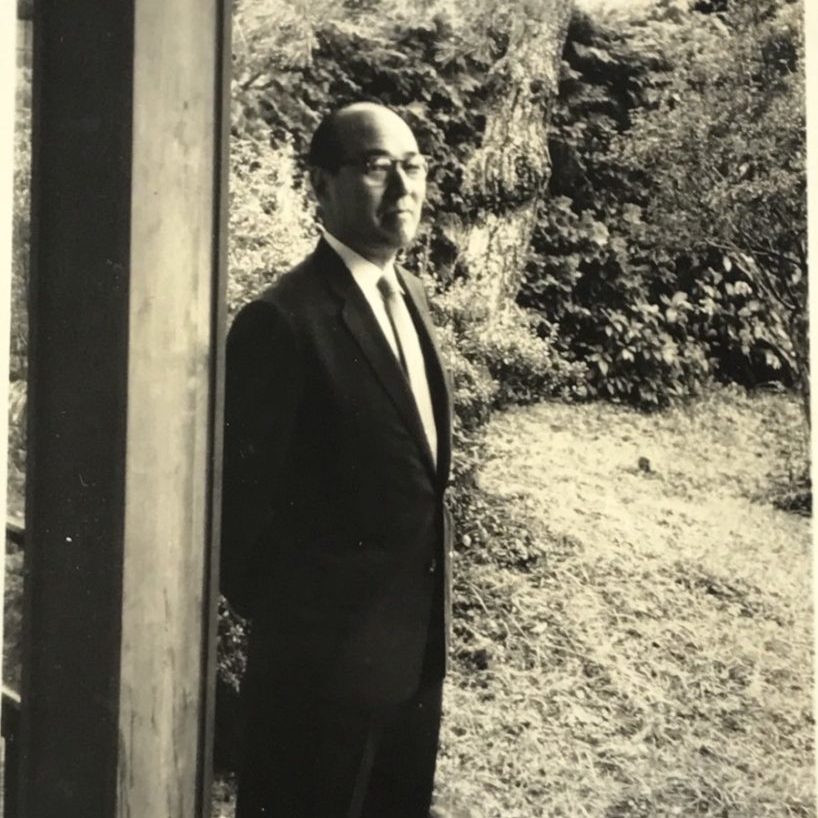
Living National Treasure

Kōtarō Shimizu 1897–1988, age 91.

Sankatsu has consistently maintained a commitment to Nagaita Chūgata, a hand-dyed technique from the Edo period, guided by the belief: “Various skills are not achieved in a day, but are the blessings of our ancestors’ virtues.”

Simultaneously, he have continued to create products by refining our skilled techniques, focusing on thoughtful design, and pursuing superior materials and comfort, working hand-in-hand with our artisans. This dedication has earned us the high reputation of “Sansho for Nagaita Chūgata.”

The “Matsukichi” workshop, exclusively dedicated to Nagaita Chūgata for Sankatsu, was inherited by Kōtarō Shimizu in 1936 after the passing of his father, Yoshigorō Shimizu, making Kōtarō the second generation to serve as Sankatsu’s exclusive artisan.

Kōtarō’s works were peerless in their precision—so exquisitely detailed and refined in the elegant Edo style that they astonished everyone, making him widely celebrated.

In 1955, Kōtarō Shimizu’s superior dyeing technique for Nagaita Chūgata was widely recognized, and he was certified as a Holder of Important Intangible Cultural Property, or a Living National Treasure.


In 1967, exclusive artisan Kōtarō Shimizu awarded the Order of the Sacred Treasure, Gold and Silver Rays.

The Living Encyclopedia of Yukata

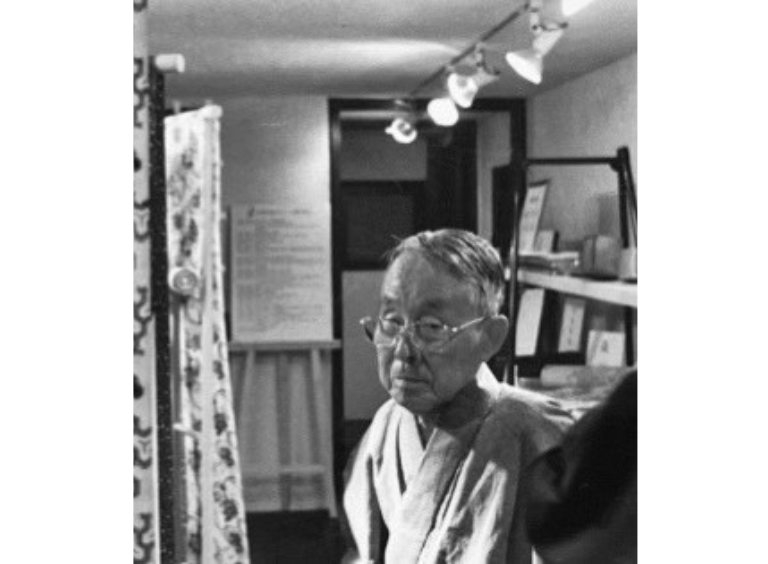
Keizaburō Shimizu 1932–2021, age 88.

Following the wishes of his father, Kōtarō, that he serve as a wholesaler’s apprentice rather than an artisan, Keizaburō, the third son of exclusive artisan Kōtarō Shimizu, joined Sankatsu in 1951.

After working in sales, he was assigned to the Sankatsu Design Department. His life was entirely dedicated to yukata, not only through his 70 years of service but also by being born into a family of dyers.

His knowledge and experience were unparalleled, leading to inquiries and exchanges with artisans across the country involved in weaving, stenciling, and dyeing.

It is no exaggeration to say that the number of yukata Keizaburō introduced to the world exceeds 100,000 bolts.

Having watched his father work since birth, Keizaburō later in life enthusiastically pursued creation and diligently organized and preserved valuable materials, including his father Kōtarō Shimizu’s works and records that escaped wartime destruction For 70 years, as the living encyclopedia of modern yukata, he guided and oversaw yukata-related techniques across Japan.

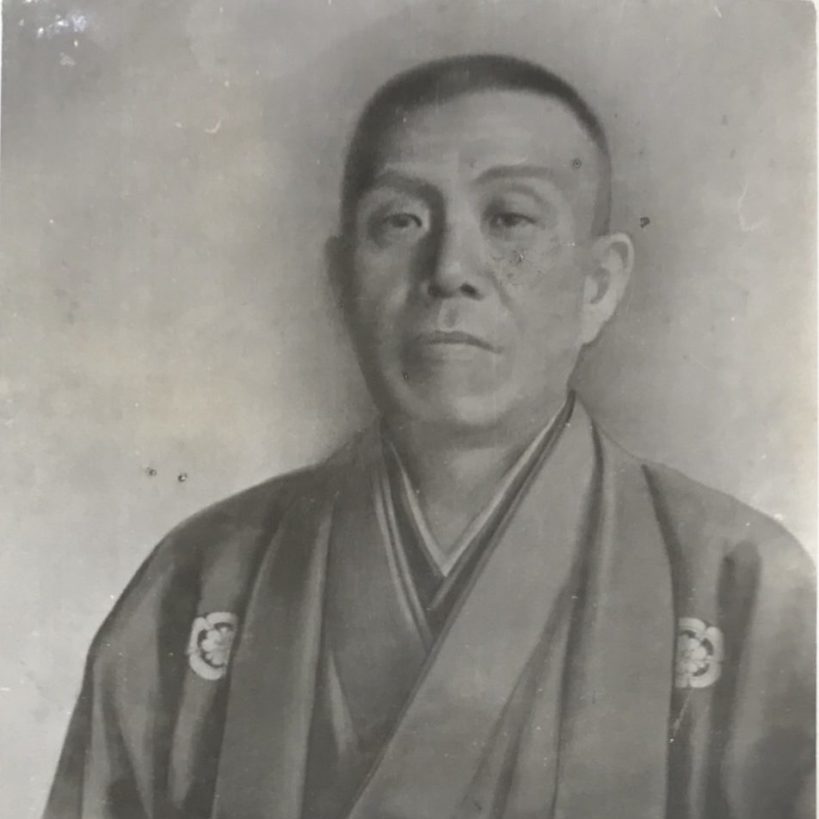
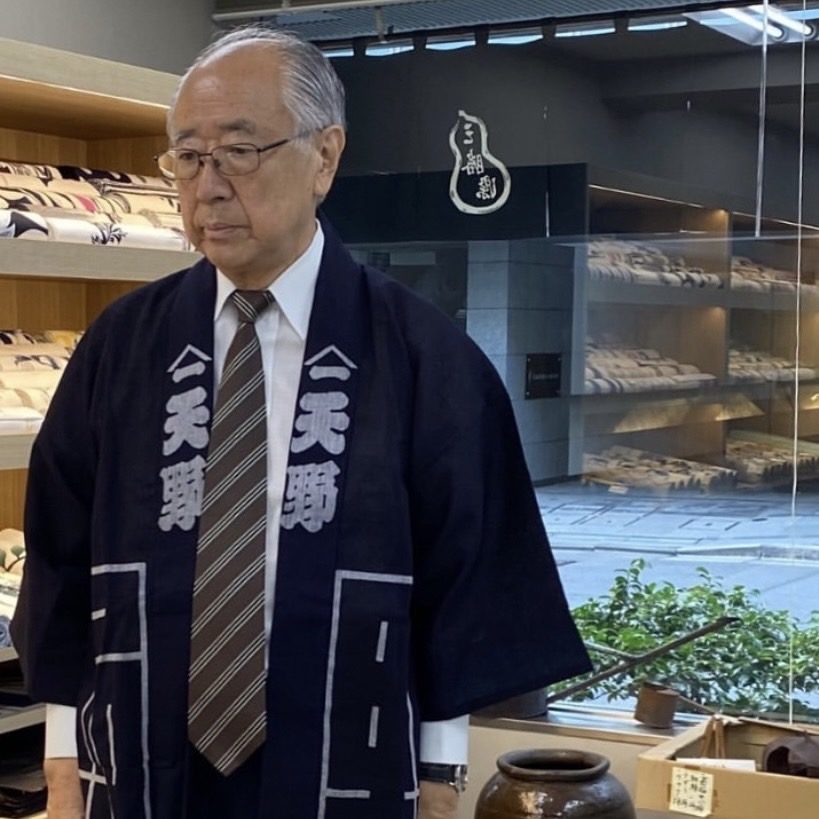
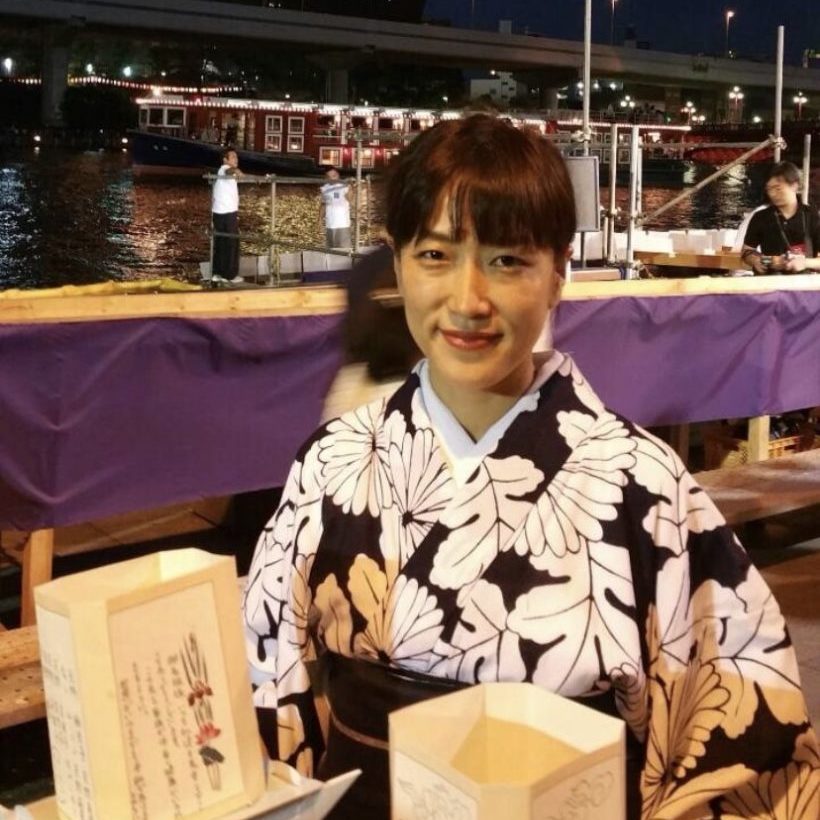
Successor: Hanshichi Amano

Named in connection with the Kabuki and Jōruri play “Hadesugata Onna Maigi” (Elegant Figure of a Woman’s Dance Robe), which features the name Hanshichi, and his link to Sankatsu.

1代目 天野半七

1st generation

2nd generation

3rd generation

4th generation